Goodbye Wiring Nightmares: Why FESTO’s New CPX-AP-A Intelligent End Plates are a Game Changer
2026-05-03If you work in custom machine building or automation, you know the “panic moment.” You’ve just finished commissioning a machine, and the client suddenly asks to add two more workstations or link up a downstream section. You open the control cabinet, and your heart sinks—it’s already packed to the brim.
Traditionally, extending a remote I/O system meant buying new gateways, re-assigning IP addresses in the PLC, and figure out how to squeeze in more power distribution. The result? A messy cabinet, a headache for the electrical team, and a significantly longer debugging phase.
To kill this pain point, FESTO recently dropped a massive update for their CPX-AP-A remote I/O platform: a pair of “secret weapon” expansion components—the FESTO Intelligent End Plates (EPLI and EPLI-S).
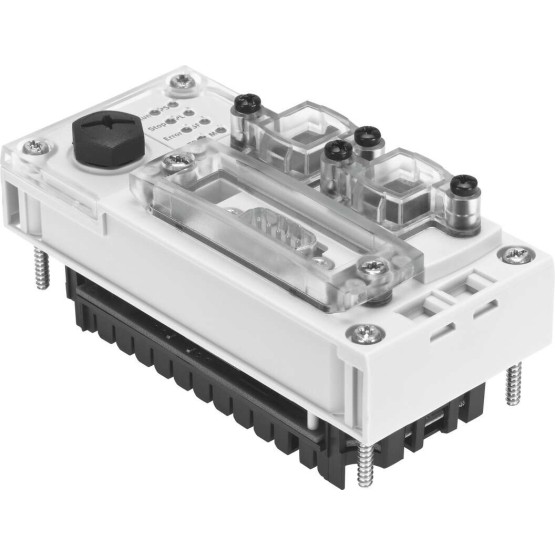
Let’s talk about how this setup actually makes life easier for electrical engineers.
1. One IP Address to Rule Them All
In the old days, every time you wanted to move I/O modules or valve terminals closer to the field, you had to sacrifice a precious network address and add more communication nodes.
The FESTO CPX-AP-A architecture was built with a “unified” mindset. Whether you have dozens of modules inside the cabinet or scattered like LEGO bricks across the factory floor, the PLC sees them as one single system occupying just one industrial Ethernet IP address.
The new FESTO Intelligent End Plates take this flexibility to the limit:
- EPLI End Plate: Extends AP communication and system power seamlessly to the next row of modules.
- EPLI-S End Plate: Not only carries the data but also allows for a fresh, independent power supply for the downstream modules.
The bottom line? You can expand your I/O across different machine segments without rewriting your control logic or adding expensive gateways.
2. A 50-Meter Reach with Rock-Solid Stability
Most engineers are hesitant to push distributed I/O too far because of latency, packet loss, or “ghost” diagnostic signals.
FESTO clearly understood the reality of the shop floor. These intelligent end plates allow for a cable distance of up to 50 meters (approx. 164 feet) between module clusters. More importantly, thanks to FESTO’s clean grounding and high-speed transmission tech, the AP architecture maintains high bandwidth and perfect synchronization.
Whether it’s high-frequency motion commands or critical diagnostic data, nothing gets lost in translation, even at a distance. For those building long assembly lines or modular machines, this is the “peace of mind” you’ve been looking for.
3. Cabinet “Slimming”: Put the I/O Where the Action Is
In modern machine design, cabinet space is expensive real estate.
With over 20 years of expertise in distributed valve terminals, FESTO knows that the best way to save space is to get out of the cabinet. By using the CPX-AP-A system with intelligent end plates, you can move I/O nodes and FESTO valve terminals directly to the “point of use.”
The benefits are immediate:
- Drastically Shorter Cable Runs: No more massive bundles of sensor wires and air tubes snaking back to the main cabinet. This saves money on materials and slashes the risk of wiring faults.
- Faster Commissioning: By eliminating the need for complex protocol layers for every new node, the wiring and setup time for the entire machine is optimized.
The Verdict
If you are designing the next generation of modular equipment and are tired of one change breaking everything scenarios, you need to look at the FESTO CPX-AP-A remote I/O system.
By adding these intelligent end plates to your toolkit, you aren’t just saving money on hardware and cabinet space—you’re adopting a smarter, more scalable topology that makes machine expansion a breeze instead of a nightmare.