AN10-01: SMC Silencer, the Noise Reduction Expert for Industrial Automation
2026-01-13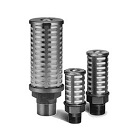
AN10-01 is a silencer produced by Japan’s SMC Corporation, belonging to the AN series. This silencer employs a porous diffusion structure, featuring low noise, low-pressure loss, and a compact design. It is widely used in industrial automation control systems, providing an effective exhaust noise reduction solution for pneumatic actuators.
Core Product Advantages
- Low-Noise Design Utilizes a porous diffusion structure. Through the absorption and diffusion of exhaust energy by the porous material, exhaust noise is effectively reduced, improving the working environment and protecting the hearing health of operators.
- Low-Pressure Loss The optimized internal flow path design reduces airflow resistance, resulting in minimal pressure loss. This ensures the response speed of pneumatic actuators remains unaffected.
- Compact and Lightweight Features a compact structural design, offering small volume and light weight. This facilitates easy installation and integration into automation equipment with space constraints, reducing the required installation space.
- High Reliability Manufactured with high-quality materials and precision machining processes, providing corrosion resistance, wear resistance, and a long service life, ensuring long-term stable operation.
Technical Specifications
| Specification Item | Specification Value | Description |
|---|---|---|
| Series | AN Series | Product series |
| Port Size | Rc1/8 | Port thread |
| Operating Pressure Range | 0~1.0 MPa | Working pressure range |
| Maximum Operating Pressure | 1.0 MPa | Maximum working pressure |
| Proof Pressure | 1.5 MPa | Pressure withstand capability |
| Operating Fluid | Air | Working medium |
| Ambient Temperature | -5~60 °C | Working temperature range |
| Operating Humidity Range | 35~85% RH | Working humidity range |
| Protection Class | IP40 | Protection rating |
Model Number Breakdown
- AN10: SMC Silencer Series Code
- 01: Port size Rc1/8
Working Principle
The AN10-01 uses a porous diffusion structure. When compressed air exhausts from the port, the high-speed airflow enters the silencer’s interior. Through the diffusion and absorption effects of the porous material, the kinetic energy of the airflow is converted into thermal energy. Simultaneously, the pores in the porous material disperse the airflow into multiple smaller streams, reducing airflow velocity and pressure, thereby effectively lowering exhaust noise. The sound-absorbing material inside the silencer further absorbs sound wave energy, achieving the noise reduction effect.
Workflow:
- Compressed air enters the silencer from the exhaust port.
- High-speed airflow passes through the porous diffusion structure.
- The airflow is dispersed into multiple smaller streams.
- Airflow velocity and pressure are reduced.
- Sound-absorbing material absorbs sound wave energy.
- Low-noise gas is discharged.
Typical Application Scenarios
- Industrial Automation Production Lines Installed on exhaust ports of pneumatic actuators like cylinders and solenoid valves in automated production lines for automotive manufacturing, electronics production, etc., to reduce exhaust noise, improve the working environment, and protect operators’ hearing.
- Packaging Machinery Installed on exhaust ports of pneumatic actuators in packaging machines to reduce equipment operating noise and improve workplace comfort.
- Robotics Technology Installed on exhaust ports of pneumatic control systems in robots to reduce exhaust noise during robot movement, creating a quieter working environment.
- Medical Equipment Installed on exhaust ports of pneumatic systems in medical equipment to reduce operating noise, creating a quieter treatment environment for patients and medical staff.
Installation and Usage Precautions
- Installation Requirements The silencer should be installed on the exhaust port of the pneumatic actuator, ensuring a firm connection to prevent air leaks. Before installation, check that the air supply pressure meets the 0~1.0 MPa requirement and ensure the air source is clean. During installation, pay attention to the silencer’s orientation to ensure the correct exhaust direction.
- Operating Environment The operating temperature range is -5~60°C; avoid use in high or low-temperature environments. Maintain relative humidity within the 35~85% RH range to prevent moisture from affecting equipment lifespan. The operating medium should be filtered before use.
- Piping Connection Before connecting pipes, thoroughly blow or clean out cutting powder, cutting oil, and dust inside the pipes. For threaded pipe and fitting connections, prevent chips from the pipe threads and fragments of sealing tape from entering the pipe interior. When using sealing tape, leave 1.5-2 thread pitches uncovered at the end of the threads.
- Regular Maintenance It is recommended to regularly inspect the silencer’s connecting pipes for leaks. Clean the silencer surface regularly. Periodically check the silencer’s noise reduction performance to ensure long-term stable operation. When restarting after prolonged shutdown, perform an air-flushing operation first.
- Safe Operation Ensure the equipment is properly grounded before operation. Avoid contact with moving parts during operation. In case of equipment malfunction, stop immediately and have it repaired by professionals. Always depressurize before installation. Strictly avoid using the product beyond its rated pressure, temperature, and medium specifications.
Conclusion
The AN10-01 silencer is the “Noise Reduction Expert” in the field of industrial automation. It perfectly combines low noise, low-pressure loss, and a compact design, providing an efficient, reliable, and quiet exhaust noise reduction solution for various industrial applications.
Choosing the AN10-01 means choosing to drive your automation system towards higher efficiency with low noise and high reliability!
| AN10-C07 |
| AN10-01 |
| AN101-01 |
| AN10-C04-DE |
| AN10-C06 |
| AN103-01 |
| AN101-X246 |
| AN103-X233 |
| AN103-KM6 |
| AN10-01 |
| AN103-KM6 |
| AN101-N01 |
| AN103-01 |
| AN103-N01 |
| AN10-N01 |
| AN101-N01 |